
Create Material
In 2026, the best Roofing Sheet is not automatically the newest, cheapest, or heaviest option. It is the sheet that suits the building, local weather, and installation details. A sunlit coastal home faces different demands from a farm shed beneath winter snow. Salt air can challenge protective coatings. Hail can dent thin metal. Heavy rain can expose weak laps and fasteners.
Common choices include galvanized steel, Galvalume steel, aluminum, copper, and translucent polycarbonate. Each offers trade-offs in price, weight, durability, appearance, and maintenance. Metal roofing consultant Rob Haddock is known for emphasizing that a roof works as a system. A practical paraphrase of that guidance is: “Choose the complete roof system, not just the sheet.” The distinction matters. Even a premium panel may underperform when its fixings, underlay, ventilation, or installation are poorly matched.
Small details count. Think of screw washers exposed to summer heat, water running toward a valley, or light filtering through a workshop roof. These details help explain why no single sheet suits every project. That sounds obvious. It is still often missed. This guide compares leading roofing sheet types for 2026, including their strengths, limitations, and best-fit uses. It also considers climate, upkeep, and whole-life value—not just the price printed on a quote. Actual performance varies with product specifications and workmanship, so check manufacturer guidance and local building requirements before choosing.
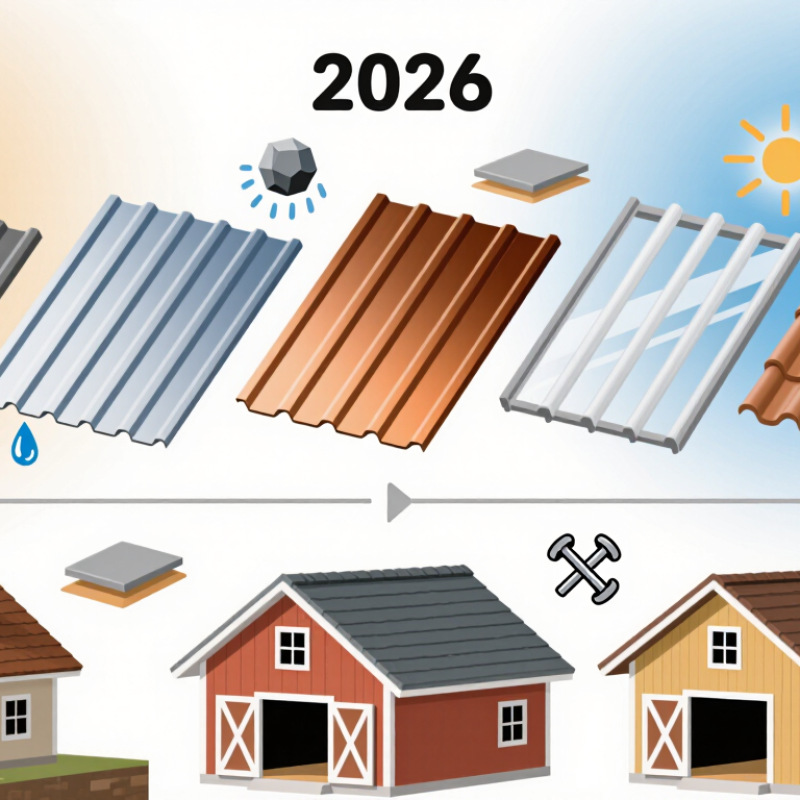
Roofing sheets are flat or profiled panels designed to shed rain and protect a building. Classification starts with the base material: steel or aluminum, fiber cement, bituminous products, and translucent plastics such as polycarbonate. Then consider the profile—corrugated, trapezoidal, or standing seam—and the surface treatment, such as painted or metallic coating. These labels matter. A deep profile can improve stiffness, while a coating affects corrosion resistance and appearance.
Metal sheets are not one uniform category. ASTM A792/A792M covers steel sheet coated with an aluminum-zinc alloy containing a nominal 55% aluminum by weight. That specification describes the coating, not the whole roof’s expected lifespan. Reflective finish is another useful classification: the U.S. Department of Energy’s Energy Saver guidance reports that cool roofs may reduce roof-surface temperatures by up to 50°F and peak cooling demand by 10–15%, depending on climate and building conditions. Performance still depends on insulation, ventilation, and installation.
Tips: Match the sheet to roof pitch, exposure, and support spacing. Check the product’s tested fire, wind, and corrosion ratings. A shiny surface alone does not guarantee a cool roof; verify its solar reflectance data. I would not choose by color alone.
A roofing sheet’s performance depends on more than its material. Climate is a good starting point. Coastal air can speed corrosion, while repeated freeze-thaw cycles may stress joints and fixings. In hot regions, reflective finishes can reduce heat gain, but ventilation beneath the roof still matters. No sheet is perfect.
Thickness and profile affect strength and drainage. A deeper rib can span wider gaps, provided the supporting structure is designed for it. Check the sheet’s stated load capacity against local wind, snow, and maintenance loads. Then consider roof pitch: shallow slopes need careful detailing because water drains more slowly. Water finds gaps.
Coatings, fasteners, and installation can change service life substantially. Dissimilar metals may corrode where they touch, and poorly placed screws can damage washers or admit water. Inspect cut edges, laps, and eaves after installation; these small details are easy to overlook. I have seen specifications focus on sheet thickness while ignoring condensation control. That is an incomplete comparison. Ask for test data, warranty conditions, and guidance on compatible fixings, then compare them with the building’s exposure and support spacing. A qualified roofer can verify that the chosen system suits the actual site.
The Main Roofing Sheet Types Available in 2026
Metal sheets, commonly steel or aluminium, suit pitched roofs where strength and long service life matter. Their standing-seam and corrugated profiles shed rain differently, and the finish affects corrosion resistance. They can be noisy during heavy rain without suitable insulation. Not every roof needs metal.
Fibre-cement sheets offer a rigid, non-metal option, while bitumen sheets are lighter and easier to handle on simple outbuildings. Polycarbonate sheets transmit daylight, making them useful for patios or roof sections needing natural light. Each material has trade-offs: check support spacing, local fire requirements, expected weather exposure, and how replacement sheets will be sourced.
Thermal performance deserves attention, too. The U.S. Department of Energy reports that cool roofs can reduce peak cooling demand by 10–15% in air-conditioned buildings, though results vary with climate and insulation. The 2024 Global Status Report for Buildings and Construction estimates that buildings and construction used 32% of global energy in 2022. These figures do not prove one sheet type is best; colour, roof design, and installation all matter. I would compare tested performance data, not just material labels. A cheap sheet can become an expensive choice.
| Roofing Type | Typical Service Life | Relative Weight | Main Advantages | Key Considerations | Often Suited To |
|---|---|---|---|---|---|
| Corrugated galvanized steel | About 30–50 years, depending on coating, exposure, and maintenance | Light | Durable, widely available, and comparatively economical; corrugations help provide stiffness. | Cut edges and damaged coatings can corrode. Sound insulation and condensation control may need attention. | Sheds, agricultural buildings, workshops, and budget-conscious roofs |
| Standing-seam steel | About 40–70 years with suitable materials, detailing, and upkeep | Light | Raised seams conceal many fasteners and help shed water; long panels can reduce horizontal joints. | Higher initial cost than basic corrugated panels. Correct detailing, compatible underlayment, and skilled installation matter. | Homes and commercial buildings seeking a long-lasting metal roof |
| Aluminum roofing sheets | About 40–70 years in many applications | Very light | Resists rust and performs well in many coastal environments; low weight can ease structural demands. | Can dent more easily than some steel products and may expand and contract noticeably with temperature changes. | Coastal areas, lightweight roof structures, and buildings exposed to humid air |
| Zinc roofing sheets | Often 60–100 years when correctly specified and installed | Light | Long service potential and a naturally developing protective surface. | Usually a premium option. Requires appropriate detailing and compatible materials; runoff and contact with other metals should be considered. | Projects prioritizing longevity and architectural appearance |
| Polycarbonate sheets | About 10–20 years, depending on UV protection and exposure | Very light | Transmits daylight and is available in clear, translucent, and opaque forms. | Check UV protection and installation guidance. Heat, impact, movement, and weather sealing affect performance. | Patios, canopies, greenhouses, and daylighting sections |
| Bitumen corrugated sheets | About 10–20 years, depending on product quality and conditions | Light | Easy to handle and can be quieter in rain than many bare metal sheets. | May be less durable than metal under prolonged exposure or severe weather; follow the specified support spacing and fixing method. | Small outbuildings, garden structures, and selected agricultural uses |
| Fibre-cement sheets | About 30–50 years when properly installed and maintained | Heavy | Non-combustible and generally resistant to rot and insect damage; provides a solid, durable covering. | Requires stronger support than lightweight metal or plastic sheets. Cutting and handling require dust controls; use asbestos-free products. | Agricultural and industrial buildings where a robust, non-combustible covering is required |
Service-life figures are broad estimates, not guarantees. Actual performance varies with climate, material thickness and finish, roof design, installation quality, ventilation, and maintenance. Check local building codes, wind and snow requirements, minimum roof slope, fire ratings, and manufacturer installation instructions before selecting a roofing system.
In 2026, the best roofing sheet depends on whether upfront cost or long service life matters more. The 2024 Cost vs. Value Report lists average US replacement costs of about $30,680 for asphalt shingles and $49,928 for metal roofing. These figures cover full projects, not material alone. Big difference. Local labor and roof shape can shift the bill.
For durability, InterNACHI’s estimated-life chart gives asphalt composition shingles a typical range of 20–30 years, compared with 40–80 years for metal roofing. Clay tiles can last longer, but their weight may require stronger roof framing. Metal sheets handle many weather conditions, yet poor installation can leave leaks around seams and fasteners. I would not treat any lifespan as a promise; coastal air, hail, and neglected maintenance change the outcome.
Tips: Ask for an itemized quote covering underlayment, flashing, fasteners, and labor. Compare the same roof area and warranty terms. Check how the material sounds in heavy rain, too. It’s easy to overlook. A cheaper sheet may cost more later if repairs are frequent.
Roofing sheets should match a building’s pitch, exposure, and insulation—not just its appearance. Steep roofs in snowy regions often benefit from profiled metal sheets that shed snow and rain, provided the structure is designed for local snow loads. Low-slope roofs need profiles and seam details suited to slow drainage. Details matter. On coastal sites, specify corrosion-resistant finishes and compatible fasteners; salt and wind-driven rain can expose weak joints quickly.
In hot, sunny climates, light-colored, reflective sheets can limit heat entering the building. U.S. Environmental Protection Agency guidance notes that cool roofs can be up to 50°F (28°C) cooler at the surface than conventional roofs under similar conditions. That does not guarantee lower bills: insulation, ventilation, and indoor cooling systems also matter. I would not choose by color alone; it is an easy shortcut, but an incomplete one.
For humid or rainy areas, prioritize sealed laps, careful flashing, and ventilation that helps control condensation beneath the sheets. In cold regions, insulated metal panels may help, but poorly detailed joints can still create cold spots. Check NOAA’s 1991–2020 Climate Normals for local temperature and precipitation patterns before comparing products. A general climate rule is imperfect. Verify wind ratings, structural capacity, and installation details for the specific building.
Common options include steel, aluminum, fiber cement, bituminous sheets, and translucent plastics. Each has different needs for support and maintenance.
They are grouped by material, profile, and surface treatment. Profiles include corrugated, trapezoidal, and standing seam.
A deeper profile can improve stiffness, but support spacing and structural design matter too. One detail cannot tell the whole story.
Profiled metal sheets can help shed snow and rain. The roof structure must still handle local snow loads.
Reflective sheets may reduce roof-surface heat. Insulation, ventilation, and cooling systems also affect indoor comfort and energy use.
Look for corrosion-resistant finishes and compatible fasteners. Salt and wind-driven rain can quickly expose weak joints.
Sealed laps, careful flashing, and suitable ventilation help manage rain and condensation. Small gaps matter.
Check roof pitch, wind and fire ratings, corrosion resistance, and support spacing. I might still overlook a detail, so review the installation plan carefully.
A Roofing Sheet is a panel or covering used to protect a building from rain, sun, wind, and other weather. Roofing sheets can be classified by material, profile, thickness, and finish. In 2026, common options include metal, bitumen, fiber cement, polycarbonate, and clay or concrete sheets. Each offers a different balance of weight, strength, appearance, insulation, and maintenance needs.
Choosing the right type depends on the roof’s design, local climate, expected lifespan, and installation budget. Metal sheets are often lightweight and durable, while bitumen can help reduce noise and suit simpler structures. Fiber cement and clay or concrete may provide a solid, traditional finish but can add weight; polycarbonate allows natural light into selected spaces. Compare both upfront and long-term costs, including upkeep and replacement, and consider heat, rainfall, wind exposure, and building structure before deciding.
