Buying Cold Rolled Steel Sheet is not simply a price comparison. It is a decision about consistency, traceability, and production risk. A dependable supplier should provide clear information about steel grade, thickness tolerance, width, surface finish, mechanical properties, and delivery capacity. Small details matter. A 1.2-millimeter sheet can fail a forming operation when its actual thickness varies beyond the agreed tolerance.
W. Edwards Deming, a leading quality expert, stated, “Quality comes not from inspection, but from the improvement of the production process.” His principle applies directly to steel sourcing. A supplier should not only inspect finished coils or sheets. The supplier should control rolling, annealing, leveling, oiling, packing, and shipment records. Ask for recent mill test certificates, inspection reports, and batch identification. Then compare them with the required ASTM, EN, or other applicable specifications.
Look beyond polished websites. Visit the mill when possible, or request a documented remote audit. Check how coils are protected against moisture, edge damage, and surface scratches. Ask whether complaints receive a written corrective-action report. Reliable communication matters when production schedules change.
Price still matters. It should not lead the decision. An unusually cheap offer may exclude testing, protective packaging, or realistic freight costs. That mistake becomes expensive later. No checklist is perfect. However, a careful buyer can reduce uncertainty by verifying documents, sampling material, clarifying tolerances, and confirming delivery terms before placing an order. This guide explains how to evaluate Cold Rolled Steel Sheet suppliers with practical judgment, not assumptions.
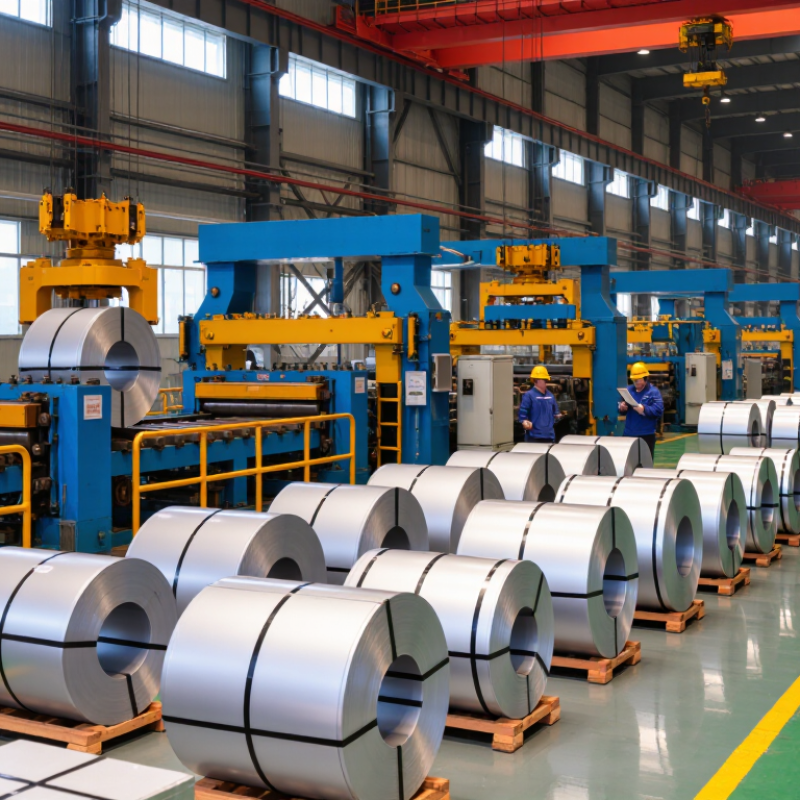
Understanding Cold Rolled Steel Sheet Grades and Specifications
Cold rolled steel sheet is selected by grade, thickness, width, surface, and intended forming process. Low-carbon grades suit bending, stamping, and general fabrication. Higher-strength grades support lighter designs but may require greater forming force. Do not choose by thickness alone.
Read the specification carefully. Check the yield strength, tensile strength, elongation, flatness, and dimensional tolerances. Surface quality also matters. A bright finish may suit visible panels, while a standard finish may work for hidden components. Confirm whether the sheet is annealed, skin-passed, oiled, or supplied with protective packaging.
Ask suppliers for current mill test certificates, inspection records, and sample measurements. Reliable suppliers should explain the applicable standard clearly and match every batch to the purchase order. A practical check is measuring several sheets with a calibrated micrometer. Small variations can affect assembly. This step is often skipped.
I once saw a buyer select a stronger grade for easy bending, assuming strength meant better quality. The parts cracked during forming. That decision needed more process data.
Before ordering, share drawings, bend radii, production volume, and coating requirements. Request a trial batch when the grade or surface is unfamiliar. Also review delivery capacity, traceability, and how complaints are handled. A low price is not reliable evidence of value.
Defining Your Application, Dimensions, Tolerances, and Surface Requirements
How to Buy Cold Rolled Steel Sheet from Reliable Suppliers?
Define the application before requesting a quotation. A stamped automotive bracket needs different properties from a painted equipment panel. State the forming method, bend direction, load, temperature, and joining process. Specify steel grade, sheet thickness, width, length, and allowable mass variation. Include the required standard, such as ASTM A1008/A1008M or EN 10131, when applicable. Do not write “standard size” without details. That phrase creates avoidable disputes.
Tolerances deserve equal attention. A 1.00 mm sheet with a narrow thickness tolerance may reduce die adjustments, but it can raise purchasing cost. Confirm thickness, flatness, edge camber, squareness, and length tolerances in writing.
Surface requirements should describe finish, roughness, oiling, cleanliness, and visible defects. Request a mill test certificate, heat number, inspection results, and coil traceability.
World Steel Association’s World Steel in Figures 2024 reports about 1.89 billion tonnes of crude steel production in 2023. Such scale makes documentation more important, not less. Suppliers should provide samples or inspection data before shipment.
I have found that a bright surface can still hide waviness. A polished sample is not enough. Ask how the supplier measures roughness and flatness, and whether results come from production coils.
Also check packaging, moisture protection, and delivery records. A reliable source welcomes precise questions. Loose specifications are rarely cheaper after production begins.
Evaluating Supplier Quality, Certifications, Capacity, and Reputation
How to Buy Cold Rolled Steel Sheet from Reliable Suppliers?
A reliable supplier should show more than an attractive quotation. Ask for the steel grade, thickness tolerance, surface finish, yield strength, and coil number. ISO’s 2022 Survey recorded 1,265,216 valid ISO 9001 certificates worldwide. Certification indicates a controlled system, but it does not prove every sheet is perfect. Request current ISO 9001 documents, mill test certificates, and EN 10204 inspection reports. Check whether the certificate matches the producing mill and shipment.
1,888.2 million tonnes
The World Steel Association reported 1,888.2 million tonnes of crude steel production in 2023.
Capacity also matters. The World Steel Association reported 1,888.2 million tonnes of crude steel production in 2023. This scale hides major differences between mills. A serious supplier should explain monthly rolling capacity, minimum order quantity, lead time, and backup production plans. Ask for photographs of edge protection, wrapping, labels, and warehouse storage. Rust stains, wet packaging, or mixed coil numbers are warning signs. I have seen small documentation gaps become expensive production delays. That lesson still needs repeating.
Tips:
Compare three recent inspection reports, not one sample. Verify thickness at several points across the sheet. Ask for independent testing when the application is critical. Visit the facility if practical. A video call helps, but it cannot replace a physical audit. Keep records of complaints and corrective actions. A supplier who answers slowly may still produce good steel, yet slow answers often reveal weak process control. Check twice.
Comparing Quotations, Minimum Orders, Lead Times, and Payment Terms
How to Buy Cold Rolled Steel Sheet from Reliable Suppliers?
A low quotation can hide important costs. Compare each offer by grade, thickness, width, surface finish, tolerance, oiling, and packing. Request the mill test certificate and a recent inspection report. The World Steel Association reported global crude steel production of about 1.84 billion tonnes in 2023. This scale does not guarantee consistent sheet quality. A supplier’s production controls matter more than volume alone. My early mistake was comparing only the price per tonne. Freight, cutting fees, and inland delivery later changed the real cost.
Minimum order quantities require practical judgment. A large MOQ may reduce the unit price, but it can trap cash and create storage risks. Compare the MOQ with your monthly consumption and warehouse capacity. Lead times should include production, inspection, export clearance, and transport. OECD analysis has highlighted continuing uncertainty in steel capacity and trade flows. Therefore, ask for a written production window, not a vague “fast delivery” promise. Request delay procedures, especially for repeated orders.
Tips: Put every quotation into one table. Show currency, delivery term, packing, validity, and taxes. Payment terms deserve equal attention. A deposit plus balance after inspection may protect both sides better than full prepayment. Documentary credit can add bank costs, but it may reduce counterparty exposure. Check whether payment starts before production or after shipping documents. Leave room for correction. Supplier claims, freight estimates, and delivery dates can all be imperfect; confirm critical details twice.
How to Buy Cold Rolled Steel Sheet from Reliable Suppliers?
Comparing quotations, minimum orders, lead times, and payment terms helps buyers evaluate the total purchasing value rather than focusing only on the steel price.
| Supplier Profile |
Quotation
USD/Metric Ton |
Minimum Order
Metric Tons |
Lead Time
Days |
Payment Term |
| Mill-Direct Option |
780 |
20 |
28 |
30% advance, balance before shipment |
| Regional Service Center |
825 |
5 |
10 |
20% advance, balance on shipment |
| International Trading Option |
800 |
10 |
35 |
Letter of credit at sight |
The chart uses a buyer-friendly score from 0 to 100, weighted across quotation price, minimum order quantity, lead time, and payment flexibility. These representative cold rolled steel purchasing ranges are indicative market benchmarks, so buyers should confirm current specifications, freight costs, quality certificates, and final terms through a written request for quotation.
Inspecting Delivered Sheets and Managing Storage, Claims, and Reorders
When cold rolled steel sheets arrive, inspect them before moving the bundle indoors. Confirm the grade, thickness, width, quantity, and heat number against the purchase order. Measure several sheets with a calibrated micrometer. Small variations may affect forming and fit.
Look for rust, edge cracks, dents, scratches, oil stains, and uneven surfaces. Check both sides, not only the top sheet. Photograph the bundle, labels, packaging, and damaged areas immediately. Keep the delivery note signed with clear remarks. My early inspections focused too much on appearance. Later, I learned that flatness and thickness often caused bigger production problems.
Store sheets on level supports above the floor. Use dry, ventilated conditions and avoid contact with concrete. Keep bundles covered, but allow air movement to prevent trapped condensation. Separate different grades and sizes with visible identification tags. Do not drag individual sheets across one another. That creates scratches quickly. Inspect stored material weekly, especially after humid weather.
If a defect appears, isolate the affected sheets and record the heat number, dimensions, location, and estimated quantity. Send the supplier a concise claim with photos and inspection data. Ask for a written response, replacement plan, or credit decision. Avoid using questionable material before agreement. For reorders, review the original problems and update the specification. Include packaging requirements, acceptable tolerances, inspection standards, and delivery checks. I still leave room for improvement: rushed receiving can hide defects, even with a good supplier.
FAQS
Match the grade to bending, stamping, strength, and fabrication needs. Low-carbon grades usually suit easier forming. Higher-strength grades may support lighter designs but need greater forming force. Do not choose by thickness alone.
Check yield strength, tensile strength, elongation, flatness, and dimensional tolerances. Confirm the thickness and width ranges. Small variations can affect assembly. Measure again.
Yes, especially for visible panels and exposed components. A bright finish may improve appearance. A standard finish may suit hidden parts. Also confirm oiling, skin-passing, annealing, and protective packaging.
Use a calibrated micrometer to measure several sheets. Check multiple points across each sheet. Compare the results with the purchase order. This step is often skipped.
Request current mill test certificates and inspection reports. Check the grade, thickness, coil number, and producing mill. The documents should match the shipment and purchase order. Paperwork alone is not proof.
Ask about monthly production capacity, minimum order quantity, and lead time. Request backup plans for production delays. Check warehouse storage, edge protection, wrapping, labels, and coil separation. Wet packaging is a warning sign.
Compare grade, thickness, width, finish, tolerance, oiling, packing, freight, and cutting fees. Include inland delivery, taxes, currency, and delivery terms. A low price can hide later costs. My earlier comparison was too narrow.
Share drawings, bend radii, production volume, and coating requirements. Explain the forming process and expected appearance. Request a trial batch when the grade or surface is unfamiliar. More process data would have prevented one cracking problem.
Conclusion
Buying Cold Rolled Steel Sheet requires more than comparing prices. Start by understanding the relevant steel grades, thickness ranges, width and length options, mechanical properties, and applicable specifications. Clearly define your intended application, required dimensions, dimensional tolerances, edge condition, flatness, and surface finish so suppliers can provide accurate and consistent quotations. It is also important to assess each supplier’s quality control system, certifications, production capacity, technical support, delivery record, and overall reputation.
When comparing offers, review the minimum order quantity, lead time, packaging, shipping arrangements, payment terms, and any provisions for quality claims. After delivery, inspect the sheets for thickness accuracy, surface defects, rust, damage, identification marks, and conformity with the agreed documents. Proper storage in a clean, dry, and protected environment helps preserve quality. Keeping detailed inspection records and communicating issues promptly can support effective claims, smoother reorders, and more reliable long-term purchasing decisions.
 Create Material
