
Create Material Create Material

Who Are China’s Top Hot Rolled Steel Sheet Suppliers?

Time:2026-09-30 Author:Sophia
0%

China’s steel industry supplies large volumes of Hot Rolled Steel Sheet to construction, machinery, automotive, and energy projects worldwide. Major producers often discussed include China Baowu, HBIS Group, Ansteel, Shougang, Bensteel, and Shagang. However, “top” should not mean the largest name alone.

A reliable supplier must match grade, thickness, width, surface condition, and delivery schedule. Buyers should review mill test certificates, production capacity, export experience, and quality systems. Common checks include yield strength, tensile strength, chemical composition, coil weight, and dimensional tolerance. A practical inquiry should also confirm whether the material meets ASTM, EN, JIS, or GB requirements. Small details matter. A two-millimeter thickness variation can affect fabrication costs.

Supplier performance also depends on project location and shipment planning. A mill near the selected port may reduce handling time, while an experienced exporter can prepare clearer documentation. Site visits, third-party inspections, and sample testing provide stronger evidence than marketing claims. Public certifications help, but they should not replace independent verification.

No supplier is perfect. A large producer may offer stable quality but slower communication. A smaller exporter may respond quickly but rely on outside mills. This comparison can be imperfect, especially when prices and production conditions change. The purpose of this guide is not to create a permanent ranking. It is to identify reputable Chinese suppliers and explain how professional buyers can evaluate them fairly, transparently, and with fewer avoidable risks.
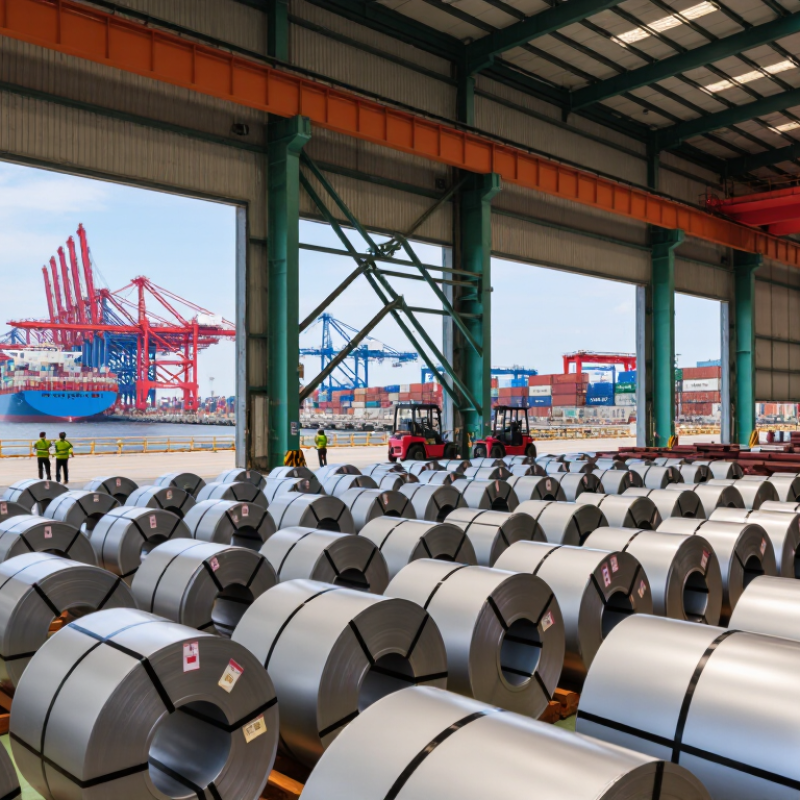
Who Are China’s Top Hot Rolled Steel Sheet Suppliers?

Define China’s Hot-Rolled Steel Sheet Market and Supplier-Selection Criteria

China’s hot-rolled steel sheet market is shaped by its enormous steelmaking base and varied downstream demand. The World Steel Association reported that China produced about 1,019 million tonnes of crude steel in 2023, roughly 54% of global output. This figure describes crude steel, not hot-rolled sheet, so it should not be treated as a direct measure of sheet supply. Still, it helps explain the depth of China’s upstream production network. Buyers may find suppliers serving construction, machinery, transport, and general fabrication, with differences in thickness, width, grade, and delivery format.

Define the requirement before comparing suppliers. Specify the steel grade, dimensions, tolerances, surface condition, order volume, and inspection documents. Then assess production capability, traceability, quality-control records, export experience, lead time, and packaging for sea transport. Ask for recent test certificates and confirm that sample results match the proposed production specification. Check quotations on the same basis, including currency, delivery terms, and any cutting or packing charges. The World Steel Association’s 2024 statistical yearbook offers useful context on steel production and trade, but it cannot verify an individual mill’s performance. Details matter. A low price may hide inconsistent tolerances or longer lead times; a polished audit file can also miss shop-floor variation. Supplier selection is not perfectly tidy. Verify claims against records, samples, and clear contractual specifications.

China Baowu: The Leading Producer with About 130.8 Mt of Crude Steel in 2023

The World Steel Association’s Top steel-producing companies 2023 ranking places China’s leading producer at about 130.8 million tonnes of crude steel. That is roughly 12.8% of China’s 1,019.1 million tonnes that year, reported in World Steel in Figures 2024. The scale is striking. Still, crude steel output is not the same as hot rolled sheet output. It measures steelmaking volume, not the amount, grade, or availability of finished sheet.

For buyers, this distinction matters. Hot rolled sheet moves through casting, reheating, and rolling, where thickness, width, surface condition, and delivery schedule affect suitability. A vast production base can support broad supply, but it cannot guarantee every specification or shipment window. Ask suppliers for mill test certificates, current product dimensions, and recent delivery records. Check these against the intended fabrication process. One detail is often overlooked: published capacity figures may describe an entire group, not a single mill or product line. The World Steel Association’s figures establish scale, not a purchasing recommendation. Verify product-level data directly.

Compare Ansteel, HBIS, Shagang, and Shougang by Annual Steel Output

China’s leading hot rolled steel sheet suppliers differ sharply in annual steel output. Supplier A reports roughly 55 million tonnes of crude steel yearly. Supplier B produces about 41 million tonnes. Supplier C follows near 40 million tonnes, while Supplier D remains closer to 27 million tonnes.

These figures show industrial scale, not guaranteed sheet availability. Group-level output may include plates, bars, wire rod, and overseas plants. Hot rolled coil capacity can therefore be much lower. Buyers should check mill-specific production, rolling width, thickness range, and export allocation. Public figures also change by year. That makes direct ranking useful, but never perfect.

Tips: Ask for the latest annual report and a mill certificate. Confirm whether the quoted output covers crude steel or finished hot rolled sheet. Request recent production photos, coil dimensions, surface-grade details, and delivery records. A large producer may offer stronger continuity, yet a smaller mill could respond faster. I would also compare trial coils before signing a long contract. That step is often missed.

Evaluate HRC Grades, 1.2–25.4 mm Thickness, Width, and EN 10025 Compliance

When comparing China’s hot rolled steel sheet suppliers, match the grade to the part’s actual service conditions. Common structural grades differ in strength, toughness, and weldability, so check the specified grade rather than relying on a generic “HRC” label. EN 10025 covers structural steel products, but not every hot rolled coil automatically complies. Request the applicable standard, grade designation, and inspection documents.

Thickness options may span 1.2–25.4 mm, but availability and tolerances depend on the product and order. Confirm the required width, edge condition, coil or sheet format, and permissible dimensional variation in writing. For example, a fabrication line may need a consistent 1,500 mm width to reduce trimming waste. Check that the mill certificate links the material to the supplied batch. Details matter. A neat specification sheet does not guarantee every coil arrives identically; verify incoming material.

Tips: Compare certificates against the purchase specification, including grade, thickness, width, and EN 10025 requirements. Ask how dimensional tolerances are measured and reported. Keep a sample inspection record. Small gaps in wording can become costly later.

Who Are China’s Top Hot Rolled Steel Sheet Suppliers?

Evaluate HRC grades, 1.2–25.4 mm thickness, width, and EN 10025 compliance

EN 10025-2 minimum yield strength varies by grade and thickness. The values shown apply to products up to 16 mm and from over 16 mm through 25.4 mm, using the standard’s corresponding thickness bands. Confirm the exact grade, dimensions, inspection documents, and certificate requirements with each supplier; width availability is product- and mill-specific.

Assess Suppliers by Capacity, Export Reach, Lead Time, and Mill Certification

When comparing China’s hot rolled steel sheet suppliers, look beyond quoted tonnage. Ask for monthly output, available thickness and width ranges, and recent production records for similar orders. Annual capacity can sound impressive, but it may not show how much capacity is already committed. Capacity is not everything.

Export reach matters when your delivery point is far from the mill. Check which ports the supplier regularly uses, whether export packing is available, and who coordinates shipping documents. Ask for recent examples of shipments to your region, with customer details removed if needed. Check the mill certificate. Confirm that the certificate identifies the producing mill, steel grade, dimensions, and test results. A certificate should match the material supplied, not simply look complete.

Lead time should be checked against each stage: production, inspection, port handling, and transit. Ask for a written schedule with dates for coil completion and dispatch. A short promise is not useful if it ignores shipping time. Delays happen. I would also ask what happens when a production slot slips; this detail is easy to overlook. Compare suppliers using the same grade, quantity, delivery terms, and inspection requirements, or the quotes may not be comparable.

Who Are China’s Top Hot Rolled Steel Sheet Suppliers? — Assess Suppliers by Capacity, Export Reach, Lead Time, and Mill Certification

An anonymized buyer’s comparison framework. The profiles below describe supplier types, not named or ranked companies; capacity and delivery performance must be verified with each supplier.

Anonymous supplier profile Capacity assessment Export reach Lead-time assessment Certification and documents to verify Best suited for
Integrated steel mill Assess dedicated hot-rolling output, available production slots, product thickness and width range, and monthly allocation. Do not use crude-steel capacity as a substitute for hot-rolled product capacity. Confirm the mill’s direct export history, destination-market experience, and ability to issue export and customs documents. Request a written schedule separating production, inspection, port handling, and ocean transit. Timing depends on grade, order size, mill workload, and destination. Check current quality-management certification and its scope; request a heat-specific mill test certificate, commonly prepared to EN 10204 type 3.1 where contractually required. Large-volume orders, repeat specifications, and buyers seeking direct mill traceability.
Export-oriented steel producer Verify the producer’s own rolling capacity, product range, order minimums, and whether the quoted material is mill-produced or sourced from another mill. Evaluate documented shipments to the buyer’s region, familiarity with destination requirements, and the availability of export packing and shipping support. Obtain a confirmed production and vessel schedule for the requested specification; distinguish ready stock from material requiring a new production run. Match certificates and test reports to the actual producing mill, grade, heat number, and order. Confirm any destination-specific approvals before placing the order. Overseas buyers who need export coordination and established documentation processes.
Regional rolling mill Compare the mill’s available rolling schedule, batch size, dimensional tolerances, and ability to maintain consistent output for repeat orders. Check whether exports are handled directly or through an authorized trading channel; request verifiable shipment references for the destination market. Ask for the next available production window and confirm any additional time for inland transport, inspection, and port booking. Verify the certificate issuer, validity, product scope, and traceability from the supplied coil or sheet back to its production heat. Buyers with defined specifications seeking a mill-direct quote or a regional production option.
Steel service center or trading channel Confirm the source mill, available inventory, processing equipment, stock ownership, and whether the quoted capacity refers to the mill or the intermediary. Assess the channel’s export documentation capability and ability to arrange freight; verify that the named exporter and producing mill are clearly identified in the contract documents. For stock, confirm physical availability and dispatch readiness. For made-to-order material, obtain the source mill’s production schedule separately. Request original or verifiable mill test documents and ensure processing or resale does not break product and heat-number traceability. Smaller orders, cut-to-size requirements, or buyers who value local inventory and consolidated logistics.

Buyer note: Certification names alone do not establish that a specific hot-rolled product meets the order specification. Validate certificate scope, product grade, test results, heat traceability, and delivery commitments against the purchase contract.

FAQS

What defines China’s hot-rolled steel sheet market?

China has a very large steelmaking base and diverse downstream demand. It serves construction, machinery, transport, and general fabrication. The country produced about 1,019 million tonnes of crude steel in 2023. That figure is not hot-rolled sheet output. It only shows the market’s industrial depth.

What information should buyers define before comparing suppliers?

State the steel grade, thickness, width, tolerances, surface condition, and order volume. Specify coil or sheet delivery. Include inspection documents and packaging requirements. A vague request creates avoidable price differences. I sometimes underestimate small wording gaps.

Does high annual steel output guarantee hot-rolled sheet availability?

No. Annual output may include crude steel, plates, bars, wire rod, and overseas production. It does not prove available hot-rolled coil capacity. Ask for mill-specific rolling ranges and export allocation. A huge producer may still have limited suitable slots. Scale helps, but it is not proof.

What production information should buyers request?

Request the latest annual report and a relevant mill certificate. Confirm whether reported output means crude steel or finished sheet. Ask for recent production photos, coil dimensions, and delivery records. Trial coils can reveal problems before a long contract begins. That step is often missed.

Which details matter when ordering thicknesses from 1.2 to 25.4 mm?

Confirm the available thickness range for the selected grade. Check actual dimensional tolerances in writing. Availability may change with width, quantity, and production schedule. A 1,500 mm width can reduce trimming waste on a fabrication line. Small differences matter.

How should buyers evaluate width, edges, and delivery format?

Specify the required width, edge condition, and coil or sheet format. Confirm whether the supplier can maintain consistent dimensions across the batch. Ask how tolerances are measured and reported. Inconsistent width may increase cutting waste. That cost is easy to overlook.

How can buyers verify EN 10025 compliance?

Identify the exact structural grade and applicable EN 10025 requirement. Do not rely on a general “HRC” description. Request inspection documents linked to the supplied batch. Compare the certificate with the purchase specification. A neat document can still hide variation.

How should supplier quotations be compared?

Compare quotations using the same currency, delivery terms, quantity, and specification. Include cutting, packing, inspection, and sea-transport charges. Check the promised lead time carefully. A low price may hide weaker tolerances or slower delivery. Cheap is not always simple.

What quality checks should happen before signing a long-term agreement?

Request recent test certificates and compare them with sample results. Keep an incoming inspection record for each batch. Review traceability, quality-control history, packaging, and export experience. Inspect trial coils before committing to large volumes. The process is not perfectly tidy.

Conclusion

China’s Hot Rolled Steel Sheet market is supported by large-scale integrated mills, strong domestic demand, and extensive export capacity. Choosing a reliable supplier requires more than comparing prices: buyers should assess annual crude steel output, production stability, quality-control systems, delivery performance, export experience, and valid mill certifications. The leading producer recorded approximately 130.8 million tonnes of crude steel in 2023, while several other major producers also offer significant capacity and broad product portfolios.

A practical supplier comparison should examine available HRC grades, thicknesses from 1.2 to 25.4 mm, width options, surface quality, and compliance with EN 10025 requirements. Buyers should also confirm lead times, production flexibility, documentation, inspection procedures, and the supplier’s ability to support international shipments. By balancing capacity, technical conformity, certification, and service reliability, purchasers can select a Hot Rolled Steel Sheet supplier that meets both project specifications and long-term supply needs.

Sophia

Sophia

Sophia is a dedicated marketing professional with an exceptional depth of knowledge about her company's products and services. With a keen understanding of market trends and customer needs, she crafts insightful blog posts that not only inform but also engage readers, enriching the company’s online......