
Create Material
Choosing a reliable China supplier for Galvanized Corrugated Steel Sheet requires more than comparing quotations. Scale matters, but it does not prove consistent product quality. The World Steel Association’s World Steel in Figures 2025 reports that China produced about 1.005 billion tonnes of crude steel in 2024. That figure describes the wider steel industry, not corrugated-sheet output or any individual factory’s performance. A useful distinction. Buyers should check whether a supplier controls forming and coating processes or sources finished coils from other mills.
For a practical comparison, request mill test certificates and confirm base-metal thickness, zinc-coating mass, profile dimensions, and applicable standards. Ask for clear product photographs, sample measurements, and packaging details. A sheet may look sound in a warehouse yet arrive with edge damage or coating marks after a long shipment. Small details count. The World Steel Association’s production data provides industry context, while technical specifications and independent inspection help assess the actual order. Where possible, compare test results against the agreed requirements rather than relying on sales descriptions.
This guide examines China’s leading suppliers through product range, manufacturing capability, quality documentation, export experience, and communication. It also considers delivery terms and after-sales support, since delays can disrupt roofing or construction schedules. Supplier rankings are never perfect; public information may be incomplete, and factory capacity can change. Treat any shortlist as a starting point. Verify claims directly, clarify tolerances in writing, and request recent references for comparable projects before placing a substantial order.
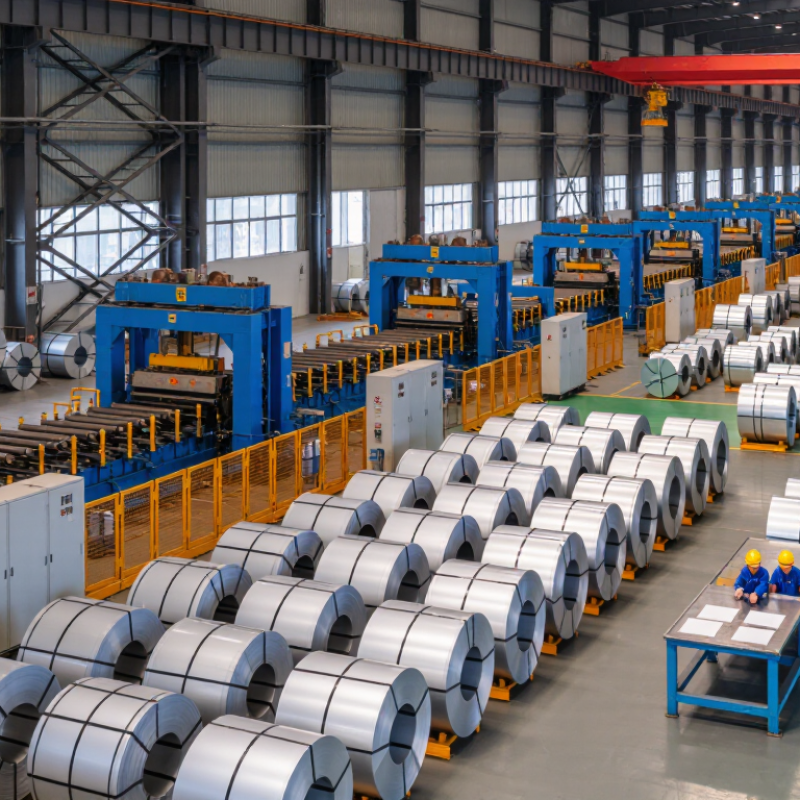
Galvanized corrugated steel sheet is flat steel protected by a zinc coating and formed into repeating ridges and valleys. The zinc barrier slows rust by separating steel from moisture and air. If scratched, zinc can also corrode preferentially near exposed steel. The protection is useful, but it is not permanent.
Manufacturing usually starts with cold-rolled or hot-rolled steel coil. In continuous hot-dip galvanizing, the cleaned strip passes through a molten zinc bath, then cooling and coating checks. Roll-forming equipment presses the coated sheet into a corrugated profile. The finished ridges add stiffness, much like folds in a thin panel. World Steel Association’s World Steel in Figures 2024 reports 1,892.2 million tonnes of crude steel production in 2023. This gives useful context for the scale of steel supply, though it is not a figure for galvanized sheet alone.
Buyers should check coating mass, base-metal thickness, profile dimensions, and surface condition against the project specification. A shiny surface is not enough evidence of durability. Cut edges deserve attention, too. Their protection can differ from the broad coated faces, and salt, standing water, or damaged coatings may shorten service life. In practice, specifications and inspection records matter more than appearance. One detail is easy to miss: corrugation depth affects stiffness and fit, so sheets with similar gauges may not perform alike.
Choosing a galvanized corrugated steel sheet starts with the intended use: roofing, wall cladding, or light structural work. Common base-steel grades include ASTM A653 CS Type B and, under EN 10346, DX51D for forming or S250GD for higher strength. These grades are not direct equivalents. Check the required strength and forming limits against the project specification. A sheet that bends easily may not suit a load-bearing application.
Zinc coating is commonly specified by mass. ASTM G90 and EN 10346 Z275 indicate about 275 g/m² across both surfaces, though naming conventions differ. More zinc can improve corrosion resistance, but cut edges, scratches, drainage, and local exposure still matter. Check the mill certificate. It should identify the coating designation and steel grade, not just a product description. That detail is easy to overlook.
Profiles range from shallow sinusoidal waves to deeper trapezoidal ribs. Rib height, pitch, sheet thickness, and support spacing affect stiffness and water drainage. Match the profile to the roof slope and installation details. Standards may vary by market, so confirm the applicable product standard, dimensions, and tolerances before ordering. One small uncertainty remains: nominal thickness alone does not tell you how rigid an installed panel will feel.
China Top Galvanized Corrugated Steel Sheet Suppliers?
How to Evaluate Chinese Suppliers and Their Manufacturing Capabilities
China’s scale is substantial: World Steel Association’s World Steel in Figures 2024 reports 1,019.1 million tonnes of crude steel production in 2023. That figure describes national output, not any supplier’s quality. Check the factory itself. Ask for the production route, monthly output by product, and recent shift records. Then compare those records with the capacity stated in the quotation. A large number on a brochure proves little.
Inspect how incoming coils are identified and tracked through galvanizing, coating checks, corrugation, and packing. Request mill test certificates linked to coil or heat numbers, plus measured base-metal thickness, coating mass, tensile strength, and profile dimensions. Confirm the test methods and units. Small details matter. During an audit, observe calibrated gauges, sampled sheets, and how rejected material is separated. Ask for a trial order and inspect its edge finish, rib spacing, and coating consistency under good light. A salt-spray result can help compare samples, but it cannot predict service life by itself. Records may look tidy; production does not always behave that way. Verify claims against dated inspection reports and actual samples.
Use coating designation as a verifiable supplier-evaluation point. The chart shows approximate minimum triple-spot-test coating mass for ASTM A653 G designations, summed over both sheet surfaces. Confirm the applicable standard edition and product requirements, then check mill test certificates and independent test results against the ordered specification.
China’s galvanized corrugated sheet suppliers generally fall into three groups: steel mills, service centers, and export-focused trading companies. Mills can offer closer control over steel production and coating specifications, but they may require larger orders. Service centers often keep common profiles or thicknesses in stock and can arrange cutting to length. Trading companies may coordinate several factories, which helps buyers compare options. Their actual production control can vary.
Some suppliers also operate forming lines, turning galvanized coils into corrugated sheets with specified profiles. Ask for the base metal thickness, zinc coating weight, sheet width, and profile dimensions in writing. Details matter. A clear mill test certificate and a sample sheet can help verify a quotation, though neither replaces inspection of the delivered batch. Check packaging, too: corner protection and tight strapping matter when sheets travel long distances. These categories are not always separate; a company may stock material and outsource forming. That can work well, but it makes responsibility for tolerances less clear. Compare suppliers by documented capability, not polished catalogs alone.
China’s scale is substantial: the World Steel Association’s World Steel in Figures 2024 reports 1,019.1 million tonnes of crude steel production in China during 2023. Yet volume alone does not prove a sheet’s quality. Compare quotes against the same grade, thickness, corrugation profile, coating mass, and applicable standard. Ask whether thickness means base steel or total coated thickness; the difference can affect price and performance. Request a mill test certificate linked to the coil number, then verify key dimensions and coating through an agreed inspection. Cheap is not enough.
Delivery terms deserve equal attention. Confirm the Incoterm, named port, loading window, freight charges, insurance responsibility, and who handles customs documentation. Ask for close-up packing photos: edge protection, dry wrapping, and secure strapping matter when sheets travel in containers. Specify how damage, shortages, or late shipment will be documented and resolved. I would not rely on a promised delivery date without a written production and shipping schedule; port congestion can change plans. One detail is easy to miss: corrugated sheets may be difficult to stack or unload safely if bundle dimensions and lifting points are not agreed before dispatch.
It is steel sheet coated with zinc and shaped into repeating ridges and valleys. The ridges add stiffness.
Steel strip is cleaned, passed through molten zinc, cooled, and checked. Roll-forming then creates the corrugated profile.
Zinc separates steel from moisture and air. Near scratches, it can corrode before exposed steel does. Protection is not permanent.
Check coating mass, base-metal thickness, sheet width, profile dimensions, and surface condition. A shiny finish proves little.
Their protection may differ from the coated faces. Salt, standing water, or damaged coatings can shorten service life.
Steel mills, service centers, and export-focused trading companies are common. Some suppliers also operate forming lines.
Request specifications in writing, plus a mill test certificate and sample sheet. Neither replaces inspection of the delivered batch. Details matter.
It affects stiffness and fit. Sheets with similar thickness may perform differently, so the gauge alone can mislead. Easy to miss.
This article explains what Galvanized Corrugated Steel Sheet is, how it is produced, and why its protective zinc coating and shaped profile make it suitable for a range of construction and industrial uses. It outlines common steel grades, coating options, sheet profiles, and relevant product standards, helping buyers understand which specifications to define before requesting quotations.
The article also describes the main types of suppliers in China and how to assess their manufacturing capabilities, product consistency, and quality-control processes. Buyers can use these points to compare quotations on a like-for-like basis, verify samples and documentation, confirm packaging and delivery arrangements, and clarify lead times and order requirements. A careful evaluation of specifications, production capacity, and service details can help identify a supplier that fits the project’s needs.
