 Create Material
Create Material
Create Material
In the diverse world of construction and infrastructure, the demand for quality Steel Pipes has never been greater. Industry expert John Smith, a veteran in the steel manufacturing sector, states, “Choosing the right steel pipe type is crucial for project success.” With a variety of options available, global buyers must carefully evaluate their choices. Each type of steel pipe serves unique purposes, influenced by factors like material composition and application.
Understanding the top types of Steel Pipes is essential for both new and experienced buyers. Common types include seamless, welded, and coated pipes, each with distinct properties. Seamless Steel Pipes offer strength and reliability, while welded pipes provide increased flexibility in construction. However, not every type will be suitable for every project. Buyers should consider specific project requirements and local conditions.
The global market for Steel Pipes is complex and requires informed decision-making. Recognizing best practices and standards can be challenging. Many buyers make mistakes by overlooking critical details. It’s vital to weigh cost against quality and suitability. The right information can lead to successful project outcomes, while poor choices can result in significant setbacks. Prioritizing knowledge in the Steel Pipe industry can help steer buyers in the right direction.
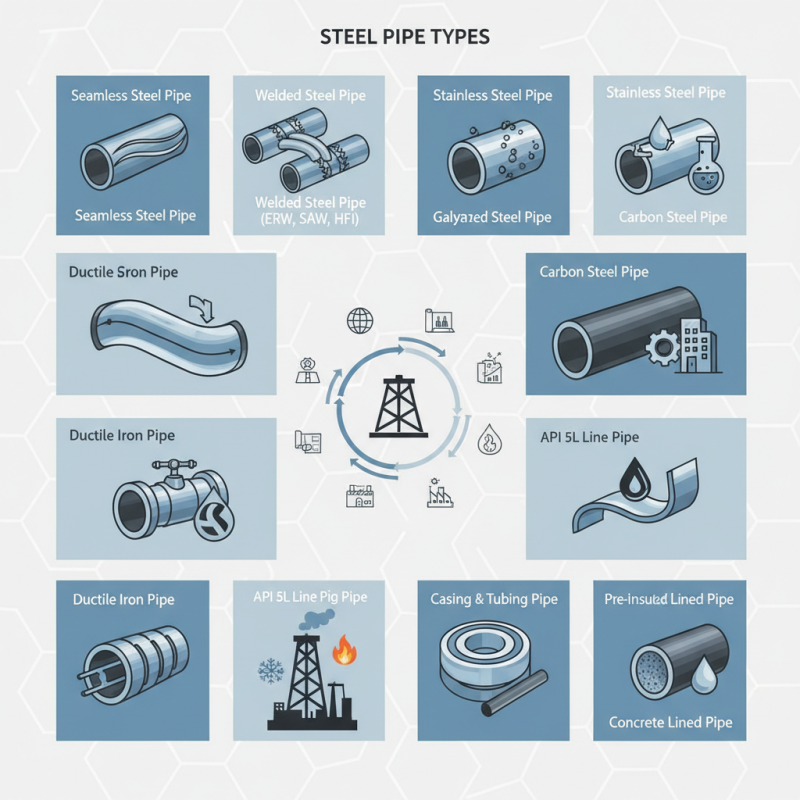
When exploring steel pipes, buyers must understand the various types available. Steel pipes are categorized based on their manufacturing process, design, and intended application. Two common types are seamless pipes and welded pipes. Seamless pipes are forged from solid rounds and offer improved strength. They are ideal for high-pressure applications. In contrast, welded pipes are made by joining flat sheets of steel. They are typically more cost-effective and widely used in construction.
Another important category involves different steel grades. Mild steel pipes are common for general use, while stainless steel pipes are resistant to corrosion. This makes the latter suitable for industries like food processing. Buyers should also consider the pipe's diameter and wall thickness based on their project's requirements. Understanding these specifications ensures they choose the right pipe for safety and performance.
The sourcing process can sometimes be challenging. Not all suppliers maintain consistent quality. Some might lack the necessary certifications or manufacturing standards. This inconsistency can lead to issues in durability and safety. Therefore, buyers should conduct thorough research. They should verify manufacturers' credentials and request samples before committing to a purchase. This diligence can prevent costly mistakes in their projects.
: The main types are seamless pipes and welded pipes. Each type serves different purposes.
Seamless pipes are forged from solid rounds. This process gives them improved strength for high-pressure uses.
Welded pipes are made by joining flat sheets of steel. They are usually more cost-effective for construction projects.
Common grades include mild steel and stainless steel. Stainless steel is corrosion-resistant, suitable for specific industries.
Some suppliers may lack quality consistency. Checking credentials helps avoid issues with safety and durability.
Buyers should consider diameter, wall thickness, and material properties. These affect the pipe's suitability for their projects.
Yes, carbon steel pipes may corrode over time. Buyers need to consider this for longevity in their applications.
Different materials offer varying durability and strength. Selecting the wrong type can lead to project failures.
Duplex stainless steel combines strength and corrosion resistance. It is ideal for harsh environments.
Yes, stainless steel is often more expensive than carbon steel. Buyers need to weigh cost against benefits carefully.
The article "Top 10 Steel Pipe Types for Global Buyers to Consider" provides a comprehensive overview of various steel pipe types essential for informed purchasing decisions. It begins by outlining the different types of steel pipes, catering to the diverse needs of global buyers. Key considerations such as material properties, cost-effectiveness, and application relevance are discussed to help buyers identify the most suitable options for their projects.
Additionally, the article delves into application-specific steel pipe types and their unique features, enhancing the understanding of how these pipes perform in real-world scenarios. A comparative analysis of material properties underscores the importance of choosing the right steel pipe, while insights into global manufacturing standards equip buyers with the necessary knowledge to ensure compliance and quality in their purchases. This holistic approach makes the article a valuable resource for anyone in the market for steel pipes.
